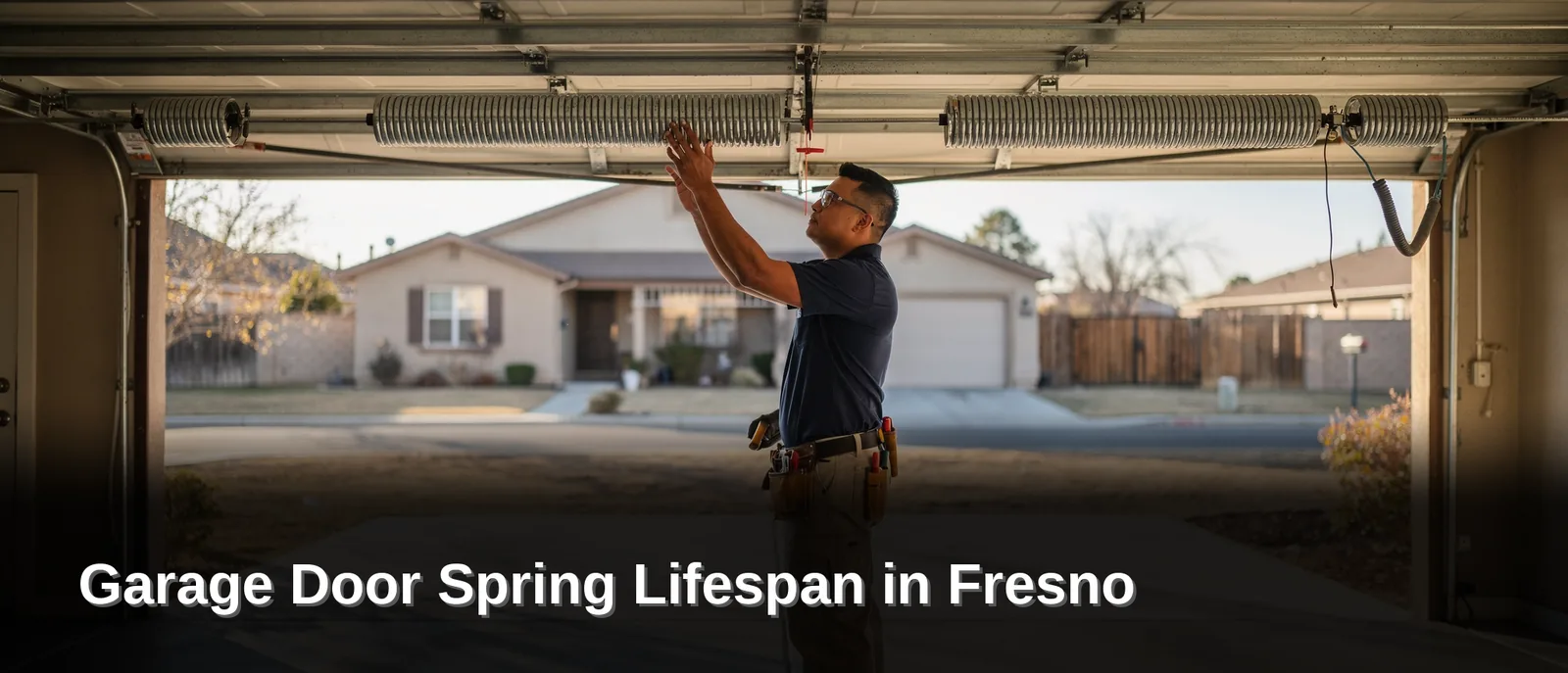
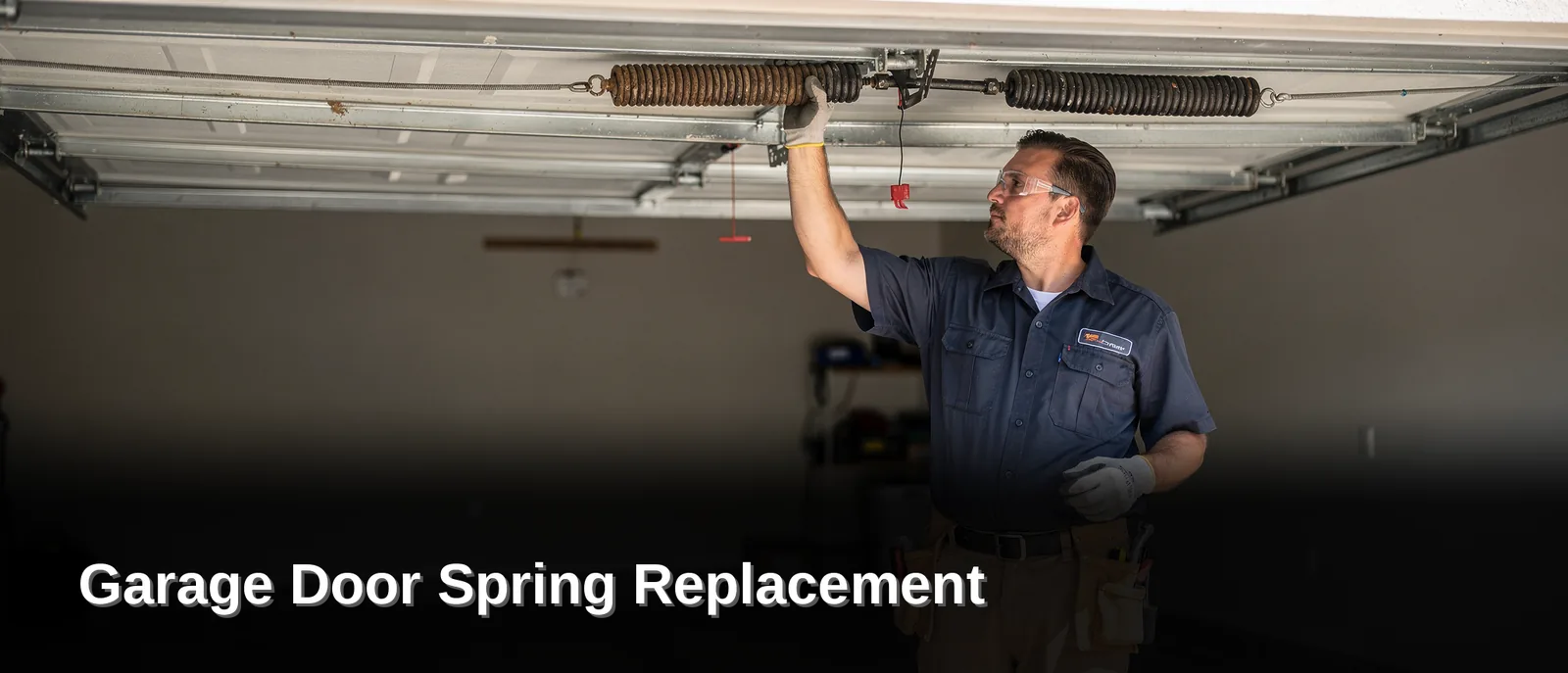
Garage door springs last an average of 8.5 years before replacement becomes necessary. Usage, materials, and Fresno’s climate affect timing. Homeowners noticing sagging, loud noises, or visible wear should schedule replacement immediately, since delayed action risks sudden spring failure, property damage, and serious injury from an unbalanced, falling door.
How Long Do Garage Door Springs Last?
Garage door springs typically remain functional for roughly 8.5 years before homeowners need to arrange a replacement. That figure represents an average, not a guarantee, since individual results vary based on the household and the door itself. Some springs fail well before that mark; others hold up longer. Understanding garage door spring lifespan helps Fresno homeowners plan ahead instead of facing a sudden breakdown.
Three factors drive how long a given set of springs will actually last:
- Materials: the quality and grade of steel used in manufacturing affects durability
- Environment: exposure to heat, humidity, and temperature swings accelerates wear
- Usage: how often the door opens and closes determines cycle count over time
These variables explain why two identical-looking springs can perform differently depending on where and how the garage door gets used.
How Many Times a Day Does a Garage Door Open?
Frequency of use plays a major role in determining how long garage door springs last. A household that opens its garage door about four times daily can expect its springs to last about seven years, shorter than the broader 8.5-year average. Families with teenage drivers, home-based businesses, or multiple vehicles often cycle their doors far more often, shortening that timeline further.
Does Climate Affect Spring Lifespan?
Environmental exposure wears springs down even without heavy daily use. Fresno’s hot, dry summers and fluctuating temperatures place additional stress on metal components over time. Regular inspection catches early wear before it becomes a full spring failure that requires emergency garage door spring replacement.
What Causes Garage Door Springs to Wear Out?
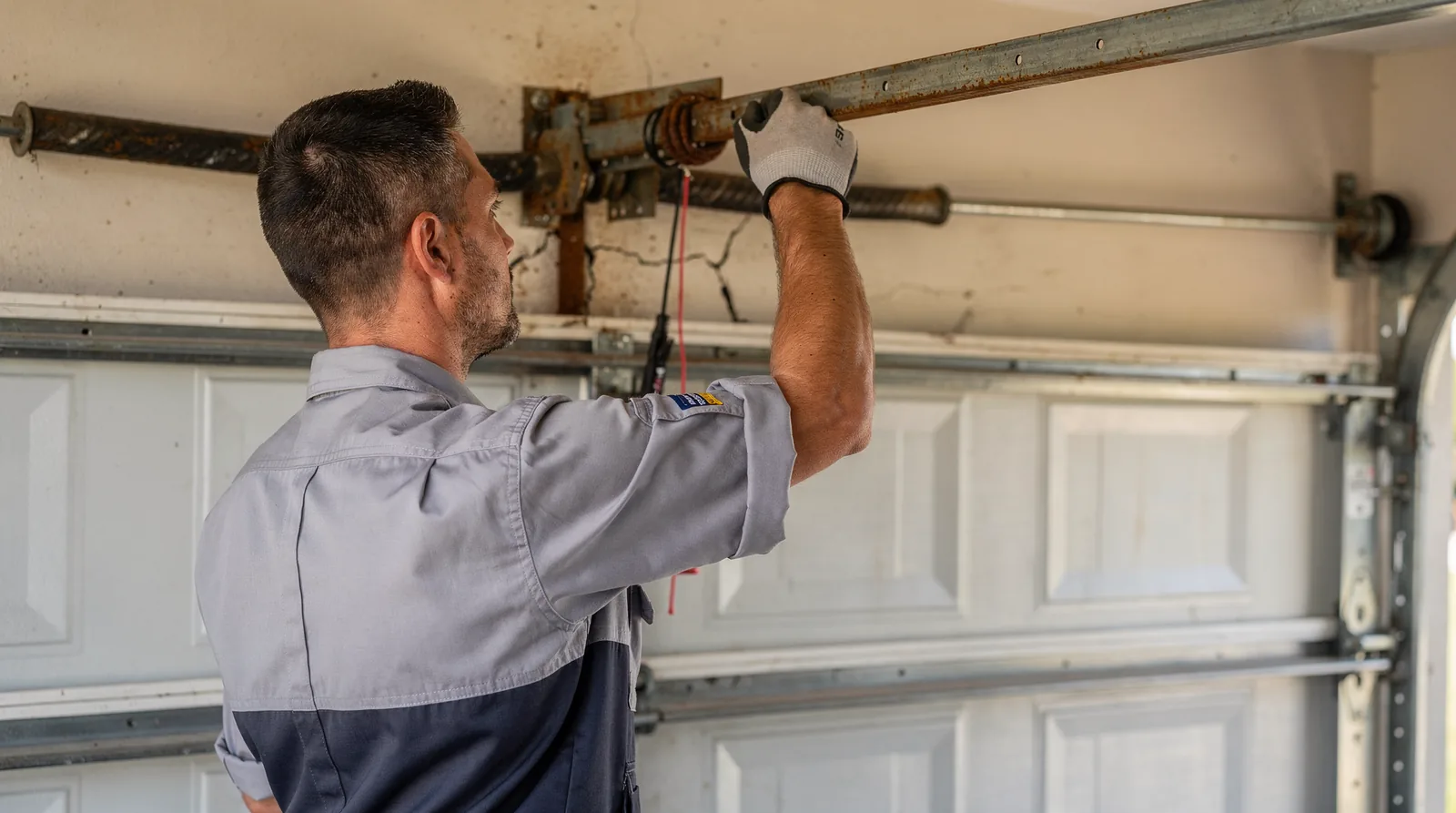
Two forces drive spring failure: mechanical fatigue from repeated cycles and environmental damage from weather exposure. Each factor shortens garage door spring lifespan differently. Both matter for homeowners planning ahead for garage door spring replacement.
Frequent use ranks among the most direct causes of wear. Every open-and-close cycle stresses the metal coils. Households that operate their garage door several times a day put far more strain on springs than those with lighter use patterns. Over time, this repeated tension wears the springs down until they lose the strength needed to lift the door safely.
Fresno’s climate adds a second layer of stress. Central Valley winters bring cold, humid mornings that create ideal conditions for rust and corrosion. Moisture that settles on the coils gradually weakens the metal, even when the springs aren’t seeing heavy daily use. Combined with fog and seasonal temperature swings, this corrosion factor can quietly shorten a spring’s working life without any obvious warning sign.
How can homeowners tell if weather damage is affecting their springs?
Rust spots, discoloration, or a rough texture on the coils often signal corrosion in progress. Homeowners who notice the door struggling more on cold or damp mornings should treat this as an early warning.
Should a professional inspect the springs regularly?
Yes. Certified technicians evaluate springs alongside cables, rollers, and other hardware, catching issues a homeowner might miss. Precision Door of Fresno technicians are trained to identify a full range of spring. Repair issues during routine inspections, helping catch corrosion or fatigue before a sudden failure puts safety or property at risk.
What Warning Signs Signal Spring Failure?
Visible gaps in the coil, sudden jerky movement, and a door that refuses to stay open all point to spring trouble. These signals matter because a worn spring does not always fail gradually. Ignoring worn springs can allow the door to fail suddenly. Come crashing down, creating a serious safety hazard for anyone nearby and risking damage to vehicles or stored belongings.
How can homeowners tell a spring is failing before it breaks?
A few consistent clues appear well before total failure. Watch for these signs:
- The door feels noticeably heavier when lifted by hand
- One side of the door hangs lower than the other, signaling uneven tension
- Loud bangs or popping noises come from above the door during operation
- The door slams shut instead of closing smoothly
- A visible gap or separation appears in the spring’s coil
Any one of these signs warrants prompt attention rather than a wait-and-see approach.
What should a homeowner do once these signs appear?
Once warning signs show up, scheduling a professional inspection is the safest next step. Local homeowners can rely on trusted experts to deliver swift, professional, and comprehensive solutions once these symptoms surface, restoring safe operation without unnecessary delay.
Garage door spring replacement is not a project for guesswork, and a qualified technician should evaluate tension, wear, and the surrounding hardware before any repair begins. Before any spring work starts, homeowners receive a written, signed estimate that fully explains the planned repair, so there are no surprises about the scope of the job. That transparency, paired with quick response to the warning signs above, keeps a minor issue from turning into an emergency repair or a safety incident.
When Should You Call a Professional for Repair?
A broken spring calls for professional attention as soon as lifting the door becomes difficult or impossible. Homeowners who notice a gap in the coil, a loud bang from the garage, or a door that refuses to open evenly should not try to fix it alone. Garage door spring replacement involves high-tension components that can cause serious injury, so contacting a trained technician remains the safest option.
Precision Door of Fresno structures its repair process around speed and readiness. Same-day service means a technician arrives. Finishes the spring replacement that same day, rather than scheduling a future visit and leaving a household without a working garage door. Waiting on a repair list adds unnecessary risk, since a damaged spring can fail suddenly and without warning.
Technicians also arrive prepared to solve the problem on the spot.
What makes a technician ready to fix a spring on the first visit?
Professionally trained technicians drive fully stocked service vehicles and carry the parts and tools needed for most repairs. This setup helps the job get done correctly on the first attempt, instead of requiring a second appointment or an extended wait for parts to arrive.
Can a broken spring get fixed outside normal business hours?
Evening and weekend appointments are available at no additional charge, 365 days a year, including holidays. A spring rarely breaks at a convenient hour. A door stuck open or shut overnight creates a security gap no homeowner wants to carry until Monday.
Recognizing these warning signs early, then calling for prompt, well-equipped service, keeps both the household and the garage door system protected from further damage.
How Does Precision Door Support Fresno Homeowners?
Fresno homeowners can reach scheduling support seven days a week, from 8 a.m. to 8 p.m., whenever a garage door spring replacement becomes necessary. Broken springs rarely wait for convenient business hours. That wide scheduling window matters when a door suddenly stops moving or sags on one side. Local access to help, rather than a distant call center, shapes how quickly a household gets back to normal.
Precision Door of Fresno operates directly out of Fresno, CA, placing technicians close to the neighborhoods they serve. A locally based operation understands the daily wear that Central Valley heat and dust place on torsion and extension springs, factors that influence garage door spring lifespan over time. That proximity also shortens the gap between a homeowner’s call and an on-site evaluation of the door’s condition.
What happens if a spring breaks in the middle of the night?
A broken spring after hours does not mean waiting until morning for a response. When a spring fails unexpectedly, homeowners speak with a live person around the clock, not an automated menu. That immediate human contact allows the household to describe the problem clearly. Get guidance on next steps before a technician even arrives.
Why does scheduling availability matter for spring issues?
A sagging or noisy door often signals a spring nearing the end of its service life. Delays increase the risk of sudden failure. Wide scheduling hours mean homeowners don’t have to skip work or rearrange a full day just to get an inspection. Support built around real availability, both by phone and in person, gives Fresno households one less thing to worry about:
- Live phone support, 24 hours a day, every day of the week
- Scheduling available from 8 a.m. to 8 p.m., seven days a week
- Local presence based in Fresno, CA, for faster coordination