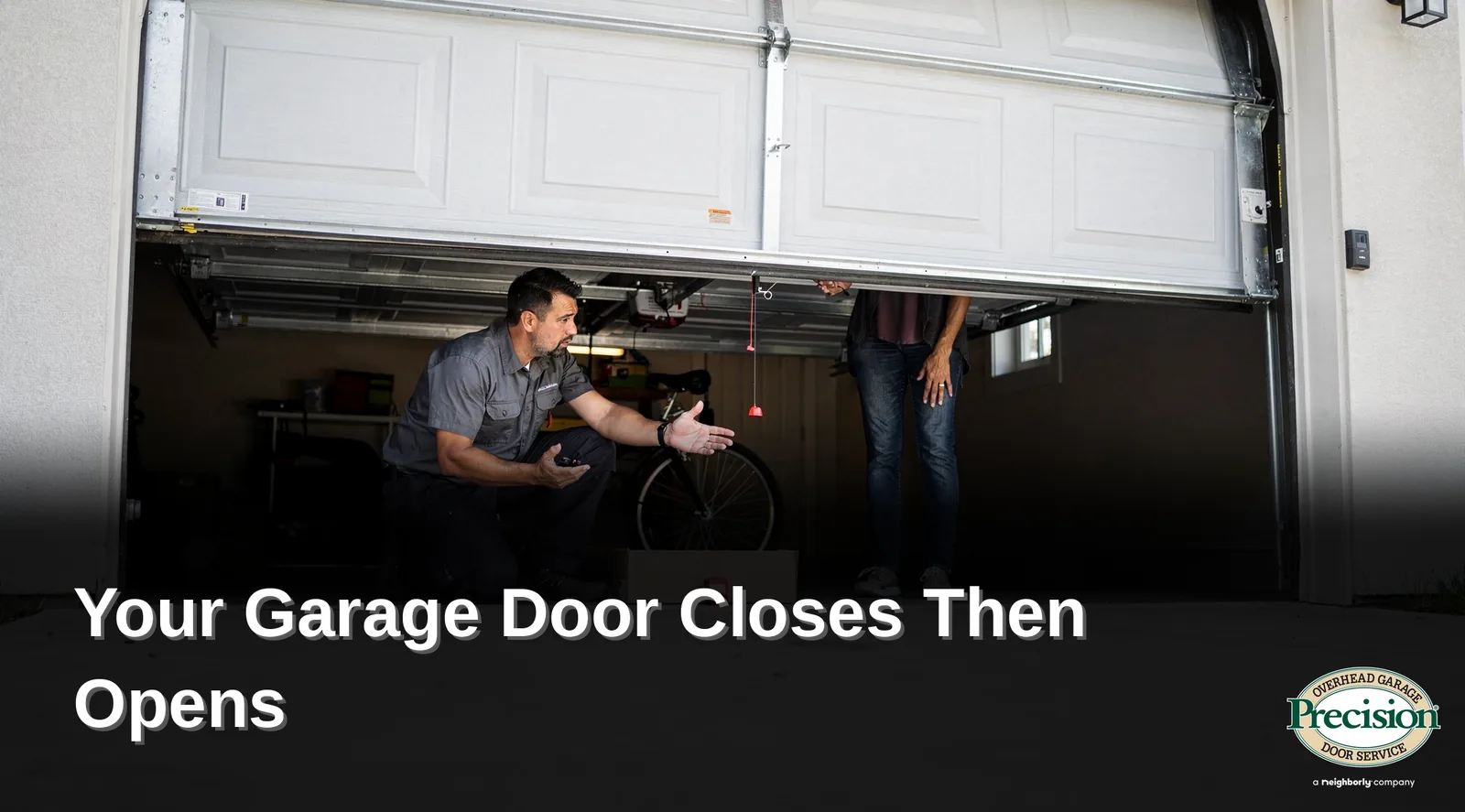
When it comes to why garage door closes then opens, garage doors that close and reopen typically trigger a built-in safety-reversal feature, designed to prevent injury when an obstruction, misaligned photo-eye sensor, or incorrect force setting is detected. Worn springs and dirty or blocked sensors are common culprits in Fresno homes. Certified technicians diagnose the exact cause and restore safe, reliable operation through proper adjustment or repair.
What Causes a Garage Door to Reverse?
A garage door reversing at the floor signals a working safety system, not a broken one. Manufacturers build this safety-reverse mechanism into every residential opener to stop the door from closing on a person, pet, or object. Understanding why a garage door closes then opens helps homeowners separate a normal safety response from a mechanical fault that needs attention.
Several culprits can cause a door to keep reversing mid-cycle. Misaligned photo-eye sensors, worn torsion or extension springs, and improperly set force limits all trigger the same reversal behavior. Because a garage door depends on dozens of interacting parts, a single failing component disrupts the entire open-close cycle.
Common triggers include:
- Sensor eyes knocked out of alignment by a bump, vibration, or accumulated dust
- Springs that have weakened from age and no longer support the door’s weight evenly
- Force settings calibrated too low, causing the opener to misread resistance as an obstruction
- A garage door travel limit adjustment that no longer matches the door’s actual closing distance
Why does the sensor light keep blinking?
A garage door sensor light blinking usually points to a broken or obstructed beam between the two photo-eye units near the floor. Dirt, cobwebs, or a slight sensor shift interrupts the signal, prompting the opener to reverse the door as a precaution. Clearing debris and realigning the sensors resolves many of these cases without further intervention.
When adjustments and cleaning fail to stop a garage door from repeatedly reopening, the issue often lies deeper in the spring tension or opener’s internal settings. Precision Door of Fresno, serving Fresno, CA homeowners, diagnoses these reversal problems and handles garage door repair fresno residents can rely on for a lasting fix.
How Do I Check the Opener Buttons First?
Opener buttons are the first diagnostic checkpoint for homeowners asking why a garage door closes, then opens unexpectedly. Aging or grime-coated buttons on the remote control stick in place, sending a continuous open/close signal to the door even after release. This malfunction often explains why the garage door keeps reopening moments after it appears to shut completely.
Fresno homeowners can rule out this cause with a few simple checks before assuming a more complex mechanical failure.
- Inspect the remote control and wall-mounted button for visible dirt, grime, or sticky residue.
- Press the button firmly, then release it fully; watch whether the door reverses immediately when it hits the floor.
- Swap the suspect button for a spare or borrowed remote to see whether the reopening stops.
- Wipe down the wall console and test again to see whether switching remotes resolves the issue temporarily.
Does a Sticky Button Really Cause the Door to Reverse?
Yes. A stuck button holds the signal open, so the opener reads a continuous command rather than a single press. This confuses the door’s operation and can mimic more serious electrical or sensor faults.
What If Swapping Buttons Doesn’t Fix It?
When a different remote produces the same reopening pattern, the problem likely lies elsewhere, such as the garage door safety reverse mechanism or sensor alignment. At that point, scheduling professional garage door repair Fresno homeowners trust becomes the practical next step. Precision Door of Fresno provides a written, signed estimate that fully explains the necessary work before any repair begins.
How Do I Inspect the Safety Sensors?
Inspection starts at the two small sensor units mounted near the bottom of each track, roughly six inches above the floor. Fresno homeowners facing a door that reverses direction just as it hits the ground deal with one of the most frustrating garage door problems. The sensor system is frequently the source. A quick visual check often reveals the issue before you even pull out a tool.
Follow these steps in order:
- Locate both sensor eyes at the base of the garage door tracks, one on each side.
- Check for a solid, steady light on each unit, not a flicker.
- Wipe both lenses with a soft, dry cloth to remove dust, cobwebs, or moisture.
- Look for physical misalignment, since brackets can shift after a bump from a vehicle or ladder.
- Clear any boxes, tools, or debris sitting in the sensor beam’s path.
- Test the door through a full open-and-close cycle after each adjustment.
Why Is My Garage Door Sensor Light Blinking?
A blinking garage door sensor light instead of a steady glow signals a broken or obstructed beam between the two units. This condition is directly tied to the door’s built-in garage door safety reverse mechanism, which stops the door from closing on an object or person. Homeowners should not ignore a blinking light. It often explains why a door closes then reverses partway through the cycle.
Should Homeowners Attempt Sensor Repairs Alone?
Basic cleaning and alignment checks are safe for most homeowners. Anything beyond that, including wiring issues or bracket replacement, calls for professional attention. Precision Door of Fresno sends professionally trained technicians in fully stocked vehicles, equipped to diagnose sensor problems correctly on the first visit. Because the company operates 365 days a year, including holidays, and answers every call with a live person 24/7, homeowners searching for reliable garage door repair Fresno services never have to wait for someone to pick up the phone.
How Do I Adjust the Travel Limit Settings?
Adjusting the travel limit requires locating the opener’s limit dial or digital control panel and making small, incremental changes until the door seats correctly on the floor without reversing. Incorrect force or travel-limit settings rank among the documented causes of a door that closes partway and then reverses, alongside misaligned sensors and worn springs. Getting this setting right restores normal operation and prevents the door from bouncing back up instead of staying shut.
Homeowners troubleshooting garage door keeps reopening issues should follow this general sequence:
- Locate the opener’s limit adjustment screws or digital settings menu, usually near the motor unit.
- Identify the “down” or “close” limit control specifically, since this governs how far the door travels before stopping.
- Make small adjustments, turning the screw or changing the digital value in tiny increments.
- Test the door after each adjustment, running a full close cycle to check the result.
- Repeat the process until the door closes fully and rests properly without triggering a reverse.
Why does a door bounce back up instead of staying closed?
A door that bounces back up instead of staying closed usually points to a clear, identifiable cause. This behavior signals that the garage door travel limit adjustment needs recalibration so the mechanism recognizes the correct stopping point. If left uncorrected, the door keeps cycling incorrectly and creates ongoing frustration and security gaps for the household.
Should homeowners attempt this adjustment alone?
Limit settings interact with force settings and safety sensors, so an imprecise adjustment creates new problems. Precision Door remains available evenings and weekends at no extra charge, giving Fresno homeowners flexible scheduling for prompt garage door repair appointments. The company’s motto, “We Fix Garage Doors Right™,” reflects its commitment to resolving issues correctly on the first visit rather than requiring repeat calls.
When Should I Call a Fresno Repair Technician?
Fresno homeowners should call a technician as soon as a garage door reverses repeatedly, refuses to seal at the floor, or shows signs of a worn spring or misaligned track. Waiting on a malfunctioning door risks a stuck vehicle, a security gap, or a full mechanical failure that turns a simple adjustment into a costly overhaul. Precision Door of Fresno, based in Fresno, CA, serves homeowners throughout the surrounding area, and Fresno residents can schedule without a long delay.
Before requesting a visit, homeowners should note a few details that speed up diagnosis:
- Identify when the reversal happens — at the floor, midway, or right after the remote is pressed.
- Check whether the sensor lights are blinking or solid, since this affects whether the issue is electrical or mechanical.
- Note any recent weather changes, impacts, or obstructions near the door track.
- Call to schedule service rather than attempting spring or cable repairs alone, since these components carry high tension.
Precision Door of Fresno keeps service hours from 8 a.m. to 8 p.m., seven days a week. Homeowners are not stuck waiting through a weekend with a door stuck open. Same-day arrival and same-day completion keep the disruption short; technicians address the problem the day they arrive rather than scheduling a follow-up visit. Homeowners avoid being placed on a waiting list or losing multiple days while a repair wraps up.
Is a reversing garage door an emergency?
A door that reverses instead of closing counts as a safety and security concern, not a minor inconvenience. An open garage overnight invites intrusion and exposes the home’s interior door to unauthorized entry, so same-day attention matters.
Can homeowners fix a reversing door without a technician?
Basic checks, like clearing sensor lenses or removing track obstructions, are safe for homeowners to try first. Spring tension, cable replacement, and force-setting adjustments require trained hands and should be handled during a scheduled technician visit.